I trained in Medicine and then in Orthopaedics and Traumatology at the University of Parma, graduating from my specialist training with honours. Since then my work has concentrated on joint replacement of the hip and knee, and on the harder end of that field: revision of implants that have failed, loosened or become infected.
I am Head of the Orthopaedics and Traumatology Unit at Casa di Cura Figlie di San Camillo in Cremona, where I operate, and I see patients in five outpatient clinics across the provinces of Cremona, Piacenza and Lodi. Surgery is available both privately and under the Italian national health service.
International faculty
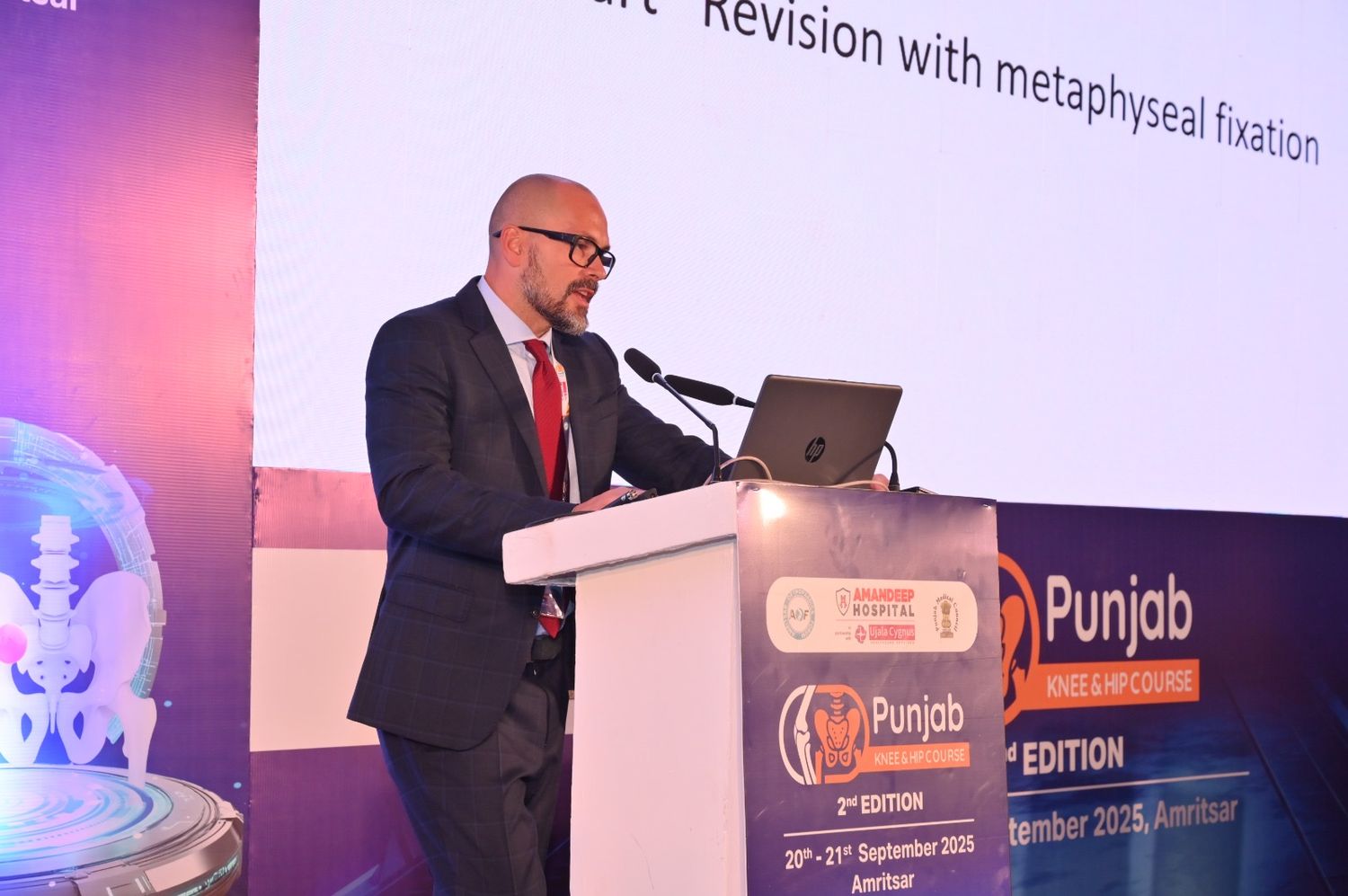
Teaching abroadIn September 2025 I was invited to India as international faculty at the Punjab Knee & Hip Course, 2nd Edition, in Amritsar — the only Italian speaker at the meeting. Alongside the scientific sessions I performed a live revision knee replacement, broadcast to the delegates: the first time that revision technique with metaphyseal fixation had been carried out in India.
The course was held at the Taj Swarna on 20–21 September 2025, organised by the Amritsar Orthopaedics Forum together with Amandeep Hospital, and brought together orthopaedic surgeons from across India. My lecture covered revision knee arthroplasty with metaphyseal fixation — one of the most demanding situations in joint replacement, where the remaining bone cannot support a conventional implant and stability has to be found in the metaphysis.
Visiting surgeons
Teaching in CremonaI regularly host orthopaedic surgeons from other countries who come to observe my hip and knee replacement practice at Casa di Cura Figlie di San Camillo in Cremona. These are short training visits, lasting a few days, and a certificate of attendance is issued at the end.
Over recent years colleagues have come from eastern Europe, the Caucasus and the Far East. They come to see the direct anterior approach to the hip, personalised alignment planning in the knee, and how revision cases are handled.
I value this part of the work for a simple reason: teaching a technique forces you to justify every step. People watching ask questions you have never asked yourself, and that improves how you operate.
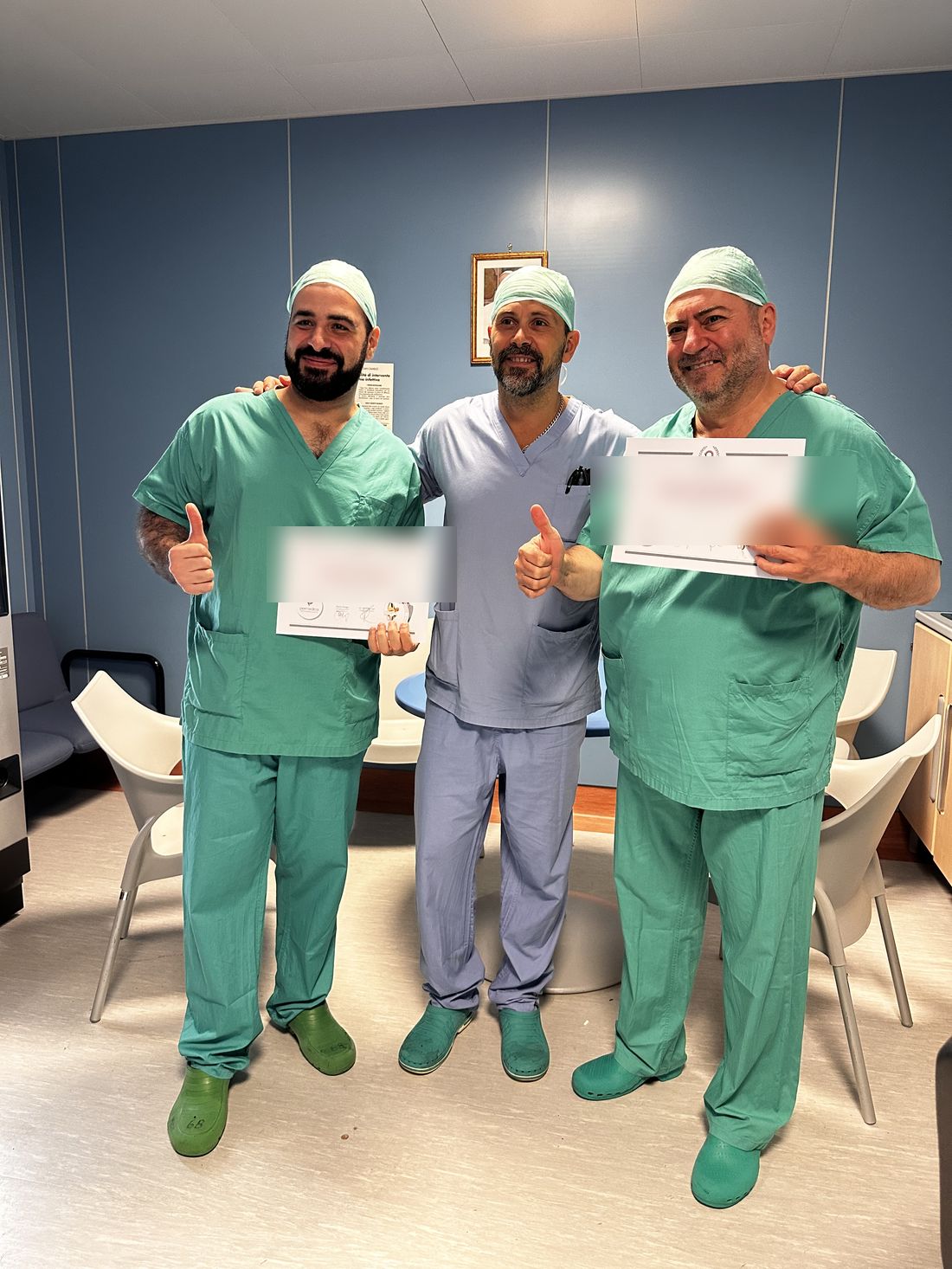
Images published with the consent of the colleagues shown. No patient is identifiable.